


Can older hot water systems use the Solar Sharer Offer? Here’s how smart meters, timers and controlled loads affect your options.
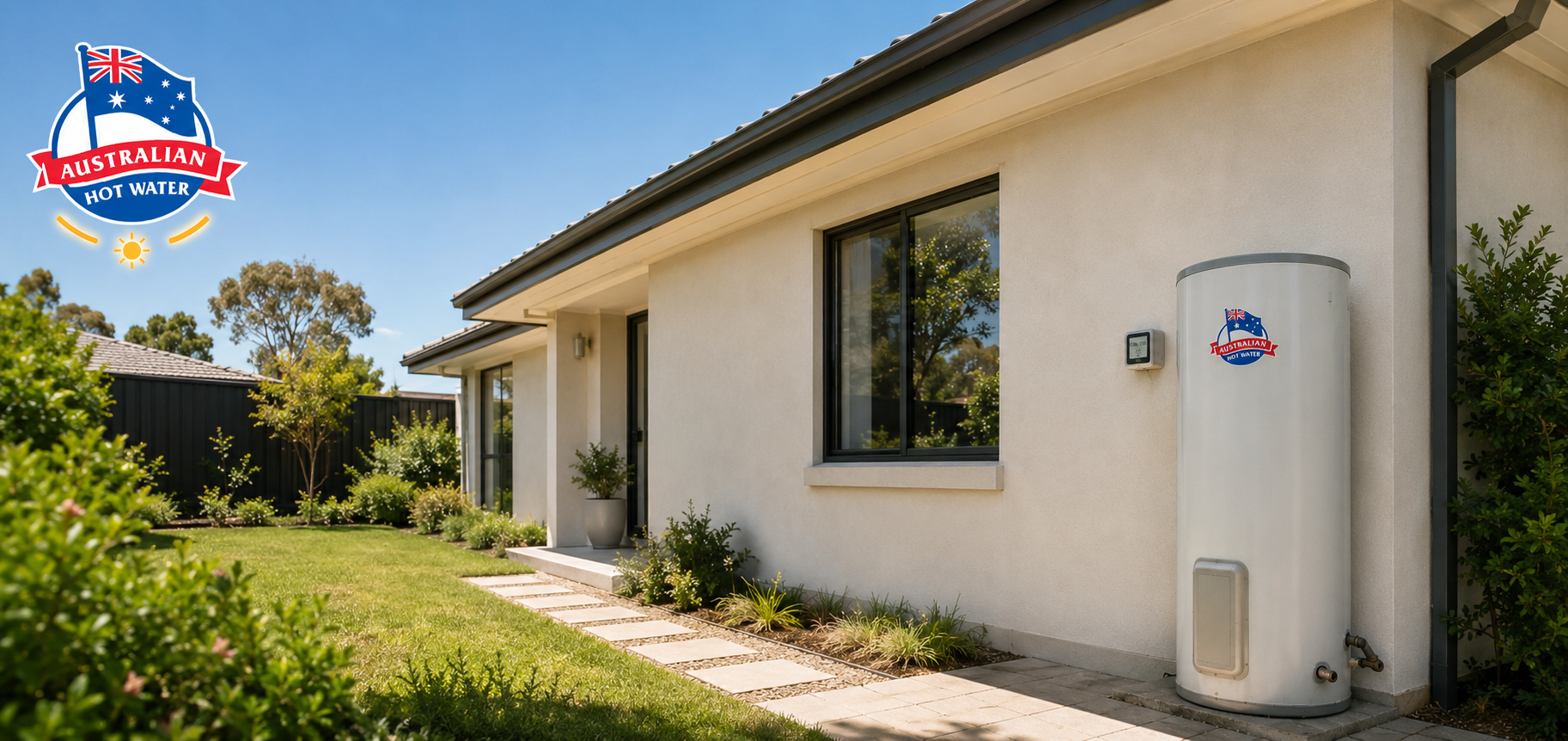
Smart meters are becoming increasingly important for Australian households, particularly with the introduction of electricity plans such as the Solar Sharer Offer.
Since 1 July 2026, eligible households in New South Wales, South East Queensland and South Australia have been able to access three hours of free electricity during the middle of the day. This creates an opportunity to run appliances, including some hot water systems, while electricity is free.
However, having a smart meter does not automatically mean your hot water system will heat during the free period. Your system’s controls, electrical connection and electricity tariff all affect whether it can take advantage of the offer.
The good news is that an older electric hot water system may still be suitable, even if it does not have Wi-Fi or smart controls.
What is a smart meter?
A smart meter is the electricity meter installed at your home. It records how much electricity the property uses at different times of the day and sends that information directly to your electricity retailer.
This allows retailers to offer electricity plans with different prices at different times, including the Solar Sharer Offer’s free daytime period.
A smart meter is not part of the hot water system itself. Replacing your old electricity meter with a smart meter will not automatically give your water heater Wi-Fi, an app or the ability to control when it operates.
The smart meter records when electricity is used. A separate timer, controller or app determines when the hot water system heats.
Many homes already have smart meters. They usually have a digital display, while older electricity meters may have a spinning disc or mechanical dials. If you are unsure what type of meter you have, contact your electricity retailer.
A national smart meter rollout is underway, with traditional electricity meters progressively being replaced. More information is available through the NSW smart meter rollout.
Why does a smart meter matter for hot water?
A smart meter is required to access the Solar Sharer Offer because your retailer needs to know how much electricity you use during the free period.
The free-electricity windows are:
| Area | Free-electricity window |
| New South Wales | 11am to 2pm |
| South East Queensland | 11am to 2pm |
| South Australia | 12pm to 3pm |
You do not need rooftop solar panels to access the offer. Eligibility is based on your location, electricity meter and retail plan, rather than whether your home generates solar power.
Hot water can be well suited to scheduled electricity use because storage systems heat water and keep it in an insulated tank. The water can be heated during the day and used for showers, washing and cleaning later.
To do this, the system needs to receive electricity during the free window and have a way of controlling when it runs.
Smart meter versus smart hot water system
It is easy to confuse a smart meter with a smart water heater, but they perform different jobs.
A smart meter records the household’s electricity use for billing. A smart hot water system may have built-in controls that let you schedule heating through an app, digital controller or Wi-Fi connection.
Many newer smart electric water heaters and compatible heat pumps include scheduling functions. Older electric storage systems generally do not, but that does not necessarily prevent them from being scheduled.
Depending on how the heater is connected, an electrician may be able to install a timer at the home’s switchboard.
How to check whether your system is suitable
Before changing your hot water settings or electricity connection, find out how the system currently operates.
Start by asking the following questions:
- Do I have a smart meter?
Check the electricity meter for a digital display or contact your electricity retailer.
- Is my water heater on general supply or controlled load?
Look for a separate controlled-load charge on your electricity bill. Your retailer can confirm the tariff and current operating arrangement.
- Does the heater have a timer or smart controller?
Check the control panel, manufacturer’s instructions or app. Some heat pumps and newer electric systems already include scheduling options.
- Can the tank reheat sufficiently in three hours?
Tank size, element capacity, starting water temperature and household demand all influence the reheating time.
- Will changing tariffs actually reduce the bill?
Compare the Solar Sharer plan’s rates, supply charges and free period with your existing general and controlled-load rates.
- Does the switchboard need additional work?
Older switchboards may require assessment or upgrades before a timer, contactor or new circuit arrangement can be installed.
Always use a licensed electrician
Installing a timer, adding a contactor or moving a water heater from controlled load to general supply involves fixed wiring and switchboard work. These changes must always be completed by a licensed electrician.
Before proceeding, you should also contact your electricity retailer to confirm:
- Whether your property has a smart meter
- Whether your hot water system is separately metered
- Which controlled-load tariff currently applies
- Whether the system’s electricity use will qualify for the Solar Sharer free period
- How changing the circuit could affect your electricity charges
- Whether any tariff or metering changes are required
The Australian Government’s Solar Sharer guidance also recommends comparing the plan’s rates and speaking with your retailer, particularly when hot water is connected to a controlled load.
Not sure how your hot water system is connected or what changes may be required? Get in touch with Australian Hot Water. Our team can assess your existing setup, explain your options and help you determine whether a timer, smart controller or different hot water solution is suitable for your home.
Find your nearest branch
Do you need both a smart meter and a timer?
For an older electric water heater, you may need both.
The smart meter records when the household uses electricity and allows the retailer to apply the Solar Sharer pricing. The timer controls when the water heater receives electricity.
Neither device performs both jobs.
A typical older-system setup may involve:
- A smart meter installed at the property
- An eligible Solar Sharer electricity plan
- The heater connected to general supply
- A switchboard timer and contactor
- A schedule matching the local free-electricity window
A newer smart heater or heat pump may use its built-in scheduling controls instead of a switchboard timer. It still needs the correct meter, electricity plan and circuit connection for its consumption to receive the free rate.
Can an older hot water system use the free period?
An older electric storage water heater does not need Wi-Fi to operate on a schedule.
If it is connected to the home’s constant or general electricity supply, a licensed electrician may be able to install a switchboard-mounted timer and an appropriately rated contactor. The timer can be programmed to make electricity available to the heater during the Solar Sharer window.
The contactor is used to safely switch the higher electrical load required by the water heater. The system’s thermostat continues to control the water temperature, so the heating element stops operating once the required temperature is reached.
This approach does not turn an older heater into a smart appliance. It simply controls the times when the heater can receive power.
The right setup will depend on:
- The water heater’s electrical requirements
- The size of the storage tank
- The heating element’s capacity
- The condition and capacity of the switchboard
- How long the tank takes to reheat
- The household’s daily hot water demand
- The property’s electricity tariff and meter configuration
A three-hour window may be enough for some systems, but it may not completely reheat every large tank after heavy use. This should be assessed before restricting the heater to one short operating period.
What if the water heater is on an off-peak tariff?
Many older electric storage systems are connected to a controlled-load circuit, sometimes called off-peak electricity.
A controlled load is separately metered and generally charged at a lower rate. In exchange for the cheaper price, the electricity network controls when power is available to the appliance.
Some households have an overnight-only arrangement, commonly known as Controlled Load 1 or Off Peak 1. Other households may have Controlled Load 2 or Off Peak 2, which provides longer supply hours and may include an additional daytime period.
The names, operating hours and switching arrangements vary between electricity networks. Your electricity bill and retailer are the best places to confirm which arrangement applies to your property.
Controlled Load 1
If a water heater only receives controlled-load electricity overnight, installing a timer will not make electricity available during the Solar Sharer window. A timer can only control an electricity supply that is already available.
To heat during the free daytime period, an electrician may need to move the water heater from the controlled-load circuit to the home’s general supply and install a timer to manage its operating hours.
This is not automatically the cheapest option. Moving away from controlled-load electricity could mean paying the home’s general electricity rate whenever the heater operates outside the free period. The retailer may also need to update the property’s tariff or metering configuration.
The likely savings should therefore be compared with the controlled-load rate before making the change.
Controlled Load 2
Controlled Load 2 may provide both overnight electricity and an additional daytime supply period. An electrician may be able to use a timer to restrict the heater’s operation to selected times within the periods when electricity is available.
However, daytime controlled-load power should not automatically be treated as free Solar Sharer electricity.
According to Energy Made Easy’s Solar Sharer guidance, appliances on controlled-load circuits continue to be charged separately at their controlled-load rates and do not benefit from the free-usage period.
If a household wants its water heater to receive the Solar Sharer free rate, it may need to be moved to general supply. The electricity retailer and a licensed electrician should confirm what is possible before any changes are made.
What is an analogue hot water timer?
An analogue hot water timer is a switchboard-mounted device that can be programmed to turn an electrical circuit on and off at selected times.
One example is the Tesla 25A Contactor and Timer for Hot Water Package, which combines an analogue timer and modular contactor for scheduling compatible electric hot water systems.
For a water heater, it is generally paired with a contactor capable of handling the heater’s electrical load. The timer controls the contactor, which switches power to the water heater.
For example, a timer could be programmed to run an older storage system during the three-hour Solar Sharer window. If additional heating is needed, another operating period could potentially be scheduled, although electricity used outside the free window would be charged according to the household’s plan.
The specific timer, contactor and electrical protection must be selected for the water heater and property. This equipment must be installed by a licensed electrician. Electrical switchboard work is not suitable for DIY installation.
Need help checking your hot water system?
Not sure whether your water heater has smart controls, runs on controlled load or could be scheduled with a timer?
Australian Hot Water can help you identify your system type, understand its controls and determine whether your existing heater is suitable for scheduled daytime heating.
Where electrical changes are required, a licensed electrician can assess the switchboard, circuit and timer requirements. Your electricity retailer can then confirm how the proposed setup would be charged under the Solar Sharer Offer.
Get in touch with Australian Hot Water for practical advice before changing your hot water system or its operating schedule.