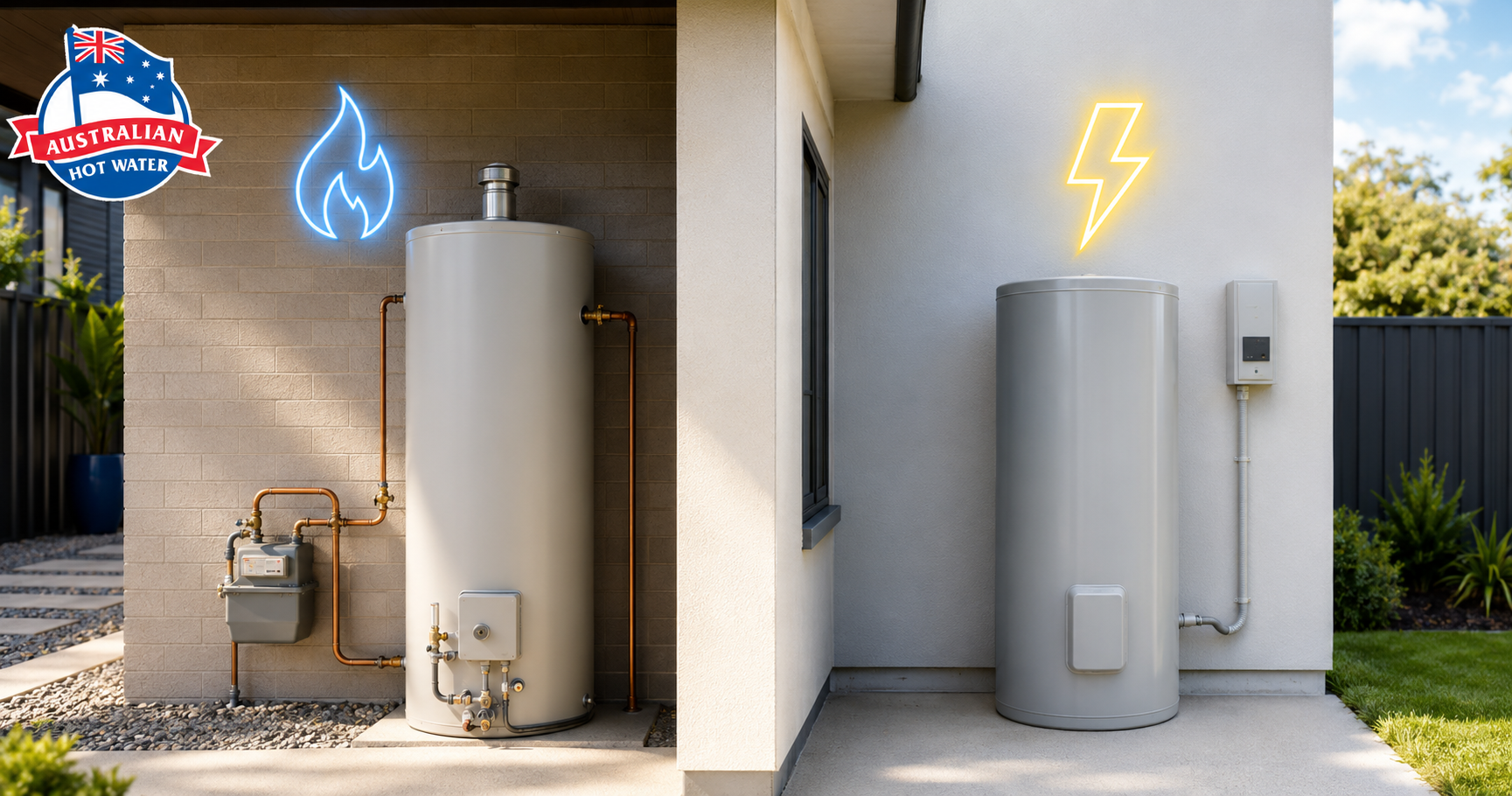


Use Solar Energy to Heat Water and Reduce Energy Costs
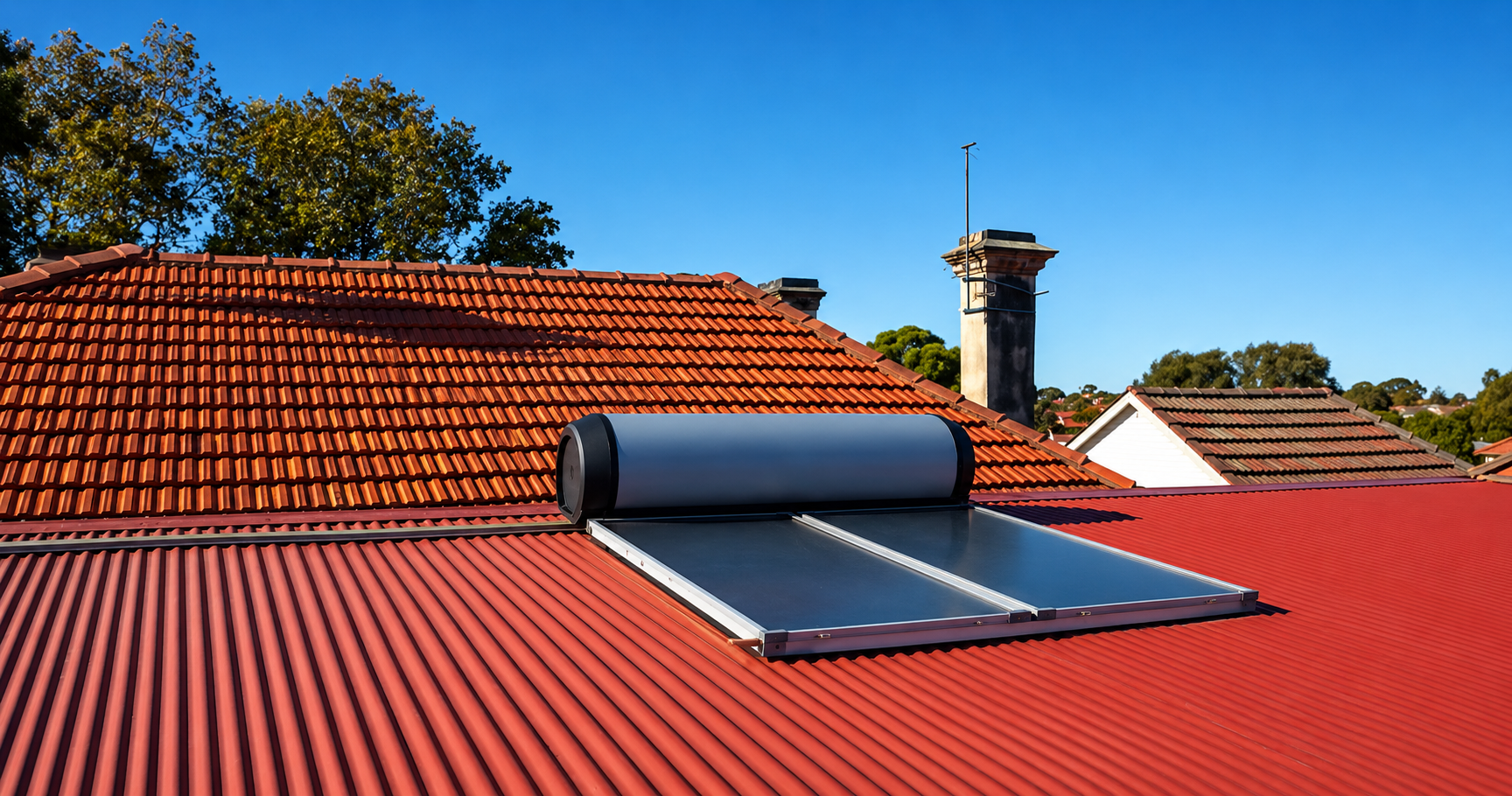
Solar hot water systems use roof-mounted solar thermal collectors to capture heat from the sun and warm water for your home. The heated water is stored in an insulated tank, ready for showers, washing and everyday household use.
Solar hot water is different from rooftop solar PV and heat pump hot water. Solar thermal collectors heat water directly, while solar PV panels generate electricity that can be used to power a heat pump, electric water heater or other household appliances.
A well-sized solar hot water system can reduce the amount of electricity needed for water heating. An electric booster provides additional heating during cloudy weather, periods of high demand or when there is not enough solar energy available.
Australian Hot Water supplies, installs, services and repairs solar hot water systems across Sydney, Canberra and Newcastle. We can help you compare systems, choose the right tank size and understand how solar hot water could work with your property and energy setup.
Contact Australian Hot Water for advice or a quote on a solar hot water system.
Solar Hot Water and the 2026 Solar Sharer Offer
Since 1 July 2026, eligible households have been able to access three hours of free electricity during the middle of each day through the Solar Sharer Offer.
The free-electricity periods are:
| Area | Free-electricity period |
| New South Wales | 11am to 2pm |
| South East Queensland | 11am to 2pm |
| South Australia | 12pm to 3pm |
The Solar Sharer Offer is an optional electricity plan. You do not need rooftop solar PV panels or a solar hot water system to access it.
The offer is relevant to different hot water technologies in different ways:
- Solar thermal collectors heat water directly and do not use Solar Sharer electricity
- An electric booster on a solar hot water system may be able to run during the free period
- A heat pump may be able to complete its heating cycle during the free period
For a solar hot water household, the main opportunity is the electric booster. If it can be scheduled to operate during the free period, it may be possible to reduce the cost of supplementary water heating and store the heated water for later.
To take advantage of the offer, a household will generally need:
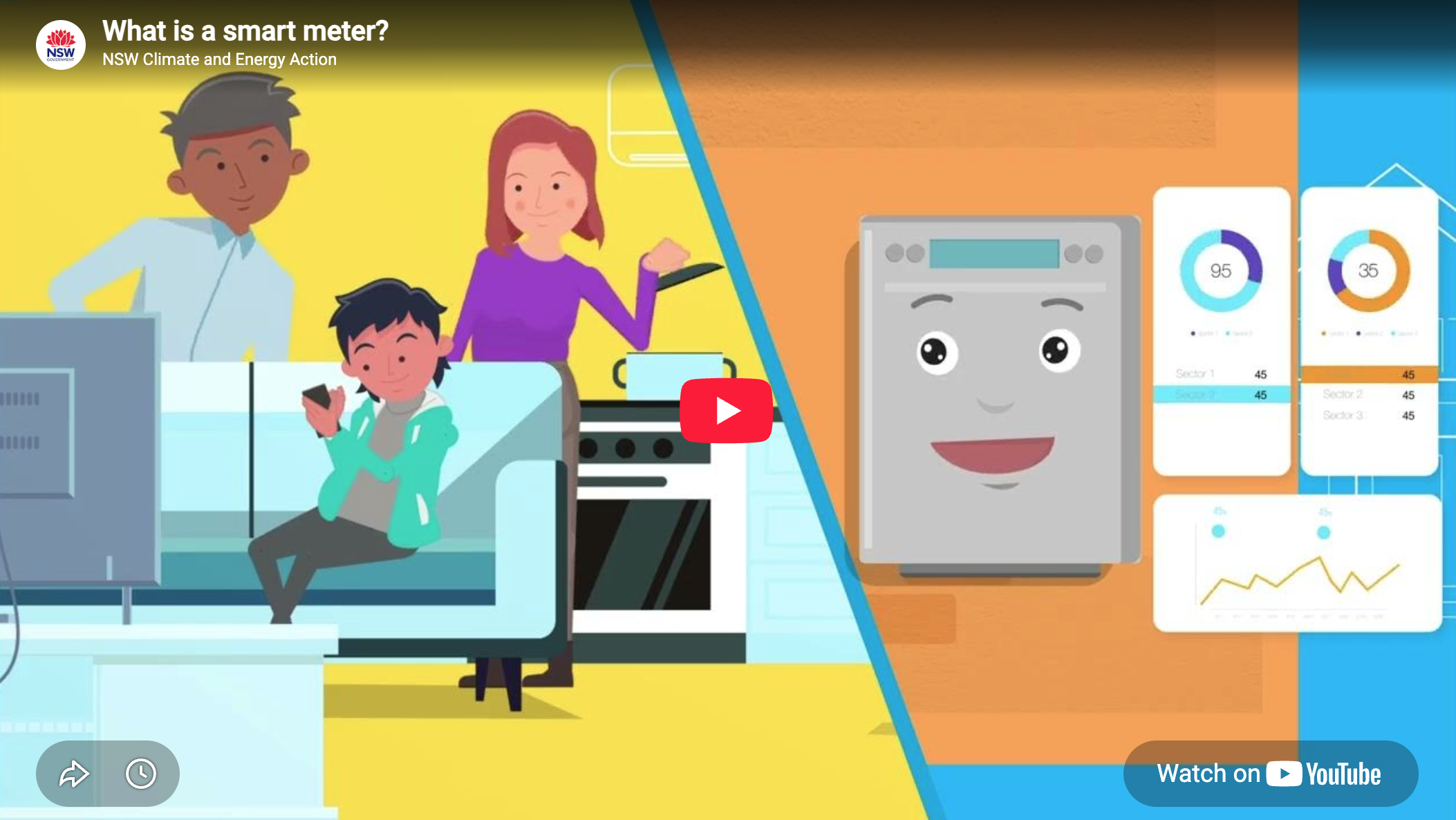
- A smart electricity meter
- An eligible Solar Sharer electricity plan
- An electric booster connected to an eligible electricity supply
- A compatible timer, controller or scheduling function
- Enough storage capacity for the household’s hot water needs
The offer provides up to 24kWh of free electricity within the three-hour daily window. Normal supply charges and electricity rates outside the free period still apply.
Check How Your Electric Booster Is Connected
Some electric boosters are connected to a controlled-load or off-peak circuit. Electricity used on a controlled-load circuit is charged separately and does not receive the Solar Sharer free rate.
A timer cannot make electricity available when a controlled-load circuit has been switched off by the electricity network. Using the free period may require changes to the booster’s electrical connection, meter configuration or tariff.
Speak with your electricity retailer to confirm how your booster is currently charged and whether the Solar Sharer Offer is suitable. Any timer installation, switchboard work or change to the electrical supply must be completed by a licensed electrician.
Read the Australian Government’s Solar Sharer guidance for current eligibility and offer information.
Solar Hot Water, Solar PV and Heat Pumps
Solar hot water, solar PV and heat pump systems can all help reduce the amount of grid energy used for water heating, but they work in different ways.
| Technology | What it does | How it relates to hot water |
| Solar hot water | Uses solar thermal collectors to absorb heat from sunlight | Heat is transferred directly from the collectors to water stored in a tank |
| Solar PV panels | Convert sunlight into electricity | The electricity can power a heat pump, electric booster or conventional electric water heater |
| Heat pump hot water | Extracts heat from the surrounding air | Uses electricity to transfer the collected heat into water stored in a tank |
Solar Hot Water Systems
Solar hot water systems use roof-mounted solar thermal collectors. The collectors absorb heat from sunlight and transfer it directly to water or a heat-transfer fluid.
The heat is then stored in a hot water tank. An electric booster provides additional heating when there is not enough sunlight or when the household requires more hot water than the solar system has produced.
Solar thermal collectors are sometimes casually called solar panels, but they are different from electricity-generating solar PV panels.
Solar PV Panels
Solar photovoltaic panels, commonly called solar PV panels, convert sunlight into electricity.
That electricity can be used throughout the home, including to power:
- A heat pump hot water system
- An electric booster on a solar hot water system
- A conventional electric storage water heater
- Household appliances
- A home battery
- An electric vehicle charger
Solar PV panels do not heat water directly. They generate electricity, which is then used by the hot water system.
Find your nearest branch
Heat Pump Hot Water Systems
A heat pump does not require roof-mounted solar thermal collectors. It uses electricity to extract heat from the surrounding air and transfer it into a storage tank.
The electricity required by a heat pump can come from:
- Rooftop solar PV panels
- The electricity grid
- A household battery
- The Solar Sharer free-electricity period, where eligible
Can Solar PV Panels Power a Heat Pump?
Yes. Electricity generated by rooftop solar PV panels can be used to operate a heat pump hot water system.
Scheduling the heat pump to run during the middle of the day can help the household use more of its own solar electricity while it is being generated. The heat pump heats the water during the day and stores it in the tank for showers and other uses later.
If the heat pump requires more electricity than the solar PV system is producing, the remaining electricity will generally be imported from the grid. A household battery may also supply stored solar electricity.
A compatible timer, controller or app can help align heat pump operation with rooftop solar generation or the Solar Sharer free-electricity period.
Combining solar PV with a heat pump is not technically a solar hot water system. However, it can still be an effective way to use solar electricity for water heating.
What Is a Solar Hot Water Heater?
A solar hot water heater uses solar thermal collectors to absorb heat from sunlight. That heat is transferred to water, which is stored in an insulated tank.
The collectors need suitable access to direct sunlight, so they are generally installed on the roof. Depending on the system, the storage tank may be installed on the roof alongside the collectors or positioned at ground level.
Solar hot water systems usually include an electric booster. The booster provides additional heating when there is not enough sunlight or when the household uses more hot water than the solar system has produced.
You do not need rooftop solar PV panels to install solar hot water. The solar thermal collectors are responsible for collecting the heat needed by the system.
How Does Solar Hot Water Work?
Most solar hot water systems operate through four main steps:
- Roof-mounted solar thermal collectors absorb heat from sunlight
- Water or heat-transfer fluid circulates through the collectors
- The collected heat is transferred to water stored in an insulated tank
- An electric booster supplies additional heating when required
The exact process depends on whether the system is roof-mounted or uses a split configuration.
Types of Solar Hot Water Systems
Roof-Mounted or Close-Coupled Systems
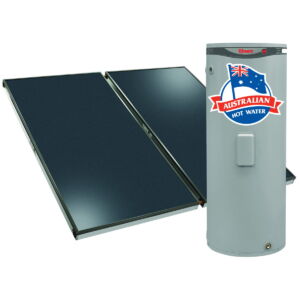
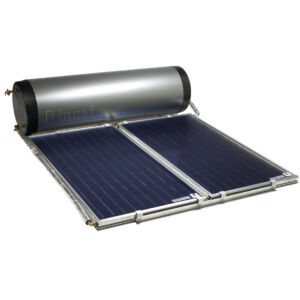
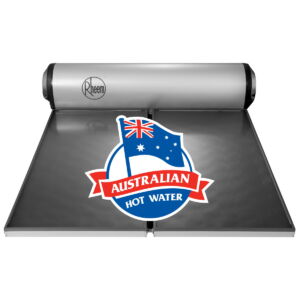
In a close-coupled system, the solar thermal collectors and storage tank are installed together on the roof.
As water heats inside the collectors, it naturally rises into the storage tank through a process known as thermosiphon circulation. Cooler water moves down into the collectors to be heated.
This arrangement does not generally require a circulation pump. However, the roof must be able to support the combined weight of the tank, water and collectors.
Homes with flat or low-pitched roofs may require a mounting frame to position the collectors at an effective angle.
Split Solar Hot Water Systems
In a split system, the solar thermal collectors are installed on the roof while the storage tank remains at ground level.
A small circulation pump transfers water or heat-transfer fluid between the collectors and tank. A differential controller and temperature sensors determine when the pump should operate.
The controller circulates heat when the collectors are warmer than the water in the tank and switches the pump off when there is not enough useful solar heat available.
Split systems reduce the amount of weight placed on the roof and can make the storage tank easier to access for servicing.
Types of Solar Thermal Collectors
Flat-Plate Collectors
Flat-plate collectors use a dark absorber plate inside an insulated, glazed panel. The plate absorbs heat from the sun and transfers it to water or heat-transfer fluid circulating through the collector.
They are a common option for Australian homes and are available for both roof-mounted and split systems.
Evacuated-Tube Collectors
Evacuated-tube collectors use rows of glass tubes to capture solar heat. The vacuum inside each tube reduces heat loss and helps the collector retain heat.
They may suit cooler climates or properties where winter performance is an important consideration.
The best collector type will depend on the property’s location, roof orientation, available space, climate and household hot water demand.
How Much Hot Water Can Solar Provide?
The proportion of water heated by solar energy depends on:
- Local climate and seasonal weather
- Collector type, size, orientation and shading
- Storage tank capacity
- Household size and water use
- Timing of hot water demand
- System condition and maintenance
- Booster settings and controls
A correctly sized system can provide a significant proportion of a household’s hot water using solar energy. Some days will provide more solar heating than others, so a booster remains important during wet weather, winter and periods of high demand.
Benefits of Solar Hot Water
Water heating represents approximately 15% to 30% of household energy use and can be one of the largest sources of household greenhouse gas emissions.
A solar hot water system can provide several benefits:
- Reduce the amount of purchased electricity used to heat water
- Lower household greenhouse gas emissions
- Store solar-heated water for use throughout the day
- Provide reliable hot water with an electric booster
- Suit both roof-mounted and ground-level tank configurations
- Potentially qualify for STCs or other available incentives
- Reduce exposure to future electricity price increases
Actual savings depend on the system, climate, household usage, booster type and energy plan.
Does Solar Hot Water Work on Cloudy Days?
Solar thermal collectors can still absorb some heat when conditions are overcast, but they will generally produce less hot water than they do on a clear day.
The electric booster provides additional heating when solar energy is insufficient. It may also operate when household demand is higher than usual or when the stored hot water has been depleted.
Some systems include frost protection to help prevent damage in frost-prone areas. The appropriate level of protection depends on the system and local climate.
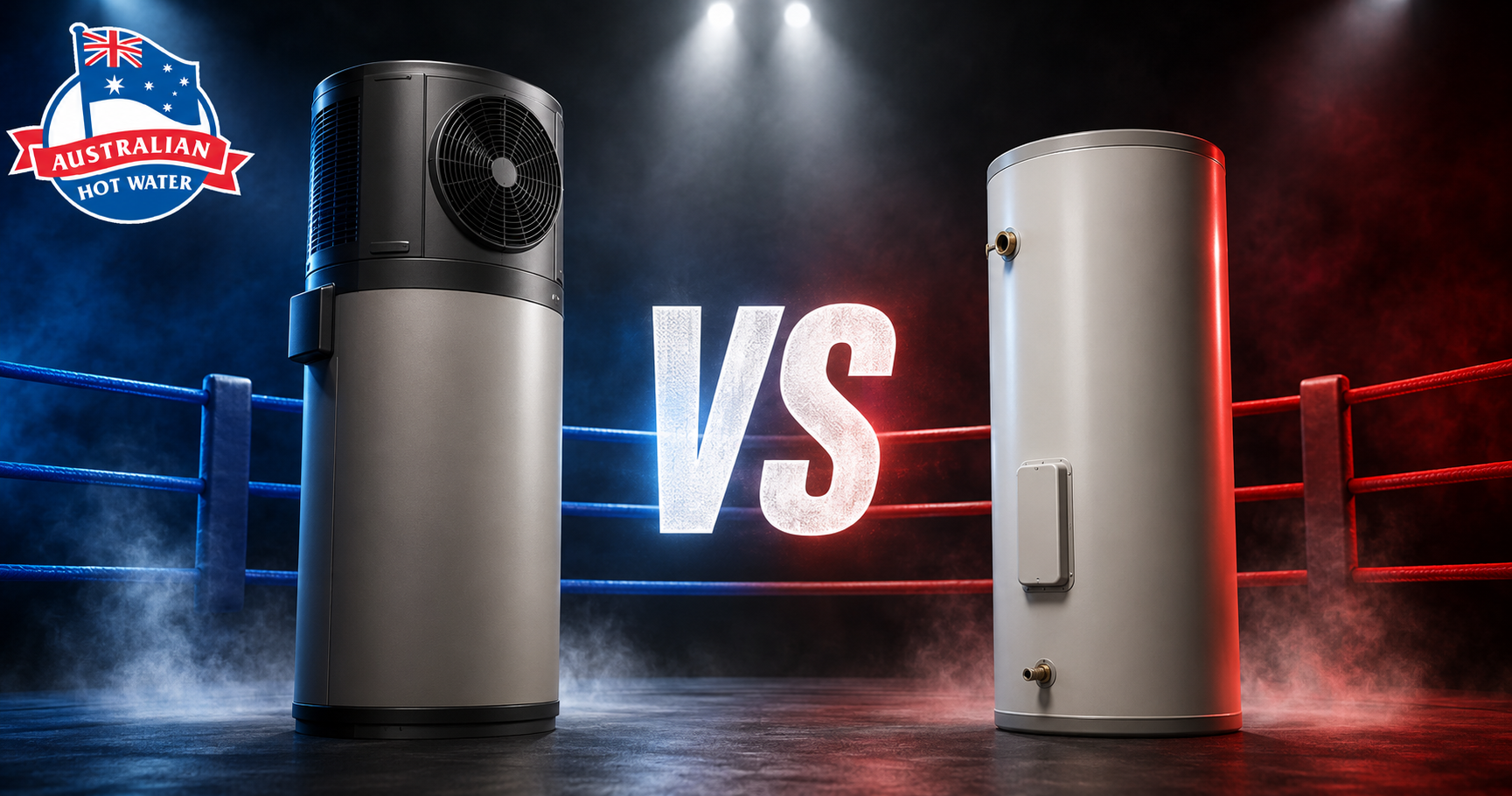
Solar Hot Water or Heat Pump?
Solar hot water and heat pump systems are both energy-efficient water heating options, but they suit different properties.
Solar hot water may suit a home with:
- Suitable roof space
- Good access to sunlight
- Limited roof shading
- An appropriate roof orientation and pitch
- Enough structural capacity for the selected system
A heat pump may be more practical where:
- The roof is heavily shaded
- There is not enough suitable roof space
- The roof is already occupied by solar PV panels
- A ground-level installation is preferred
- The household wants to schedule heating through a timer, controller or app
If a property already has solar PV panels, pairing them with a heat pump can allow solar-generated electricity to be used for water heating during the day.
The right choice will depend on the property, household size, hot water usage, climate, available installation space and budget. Australian Hot Water can help you compare solar hot water and heat pump options.
Choosing the Right Solar Hot Water System
Solar hot water is a long-term investment, so choosing the correct system and tank size is important.
Before recommending a system, Australian Hot Water can consider:
- Number of people in the household
- Daily hot water demand
- Roof size, pitch, orientation and shading
- Existing solar PV panels
- Roof condition and structural capacity
- Local weather and frost conditions
- Available space for a ground-level tank
- Electric booster requirements
- Existing plumbing and electrical connections
- Smart meter, tariff and timer arrangements
- Installation and ongoing servicing requirements
The upfront cost of solar hot water is generally higher than a conventional electric water heater. However, reduced energy use may help offset the initial difference over the system’s operating life.
Contact Australian Hot Water to discuss which solar hot water system would suit your property.
Find your nearest branch
Solar Hot Water Rebates and Incentives
Eligible solar hot water systems may qualify for small-scale technology certificates through the Australian Government’s Small-scale Renewable Energy Scheme.
STCs have a market value and are commonly assigned to a registered agent in exchange for an upfront discount on the purchase price. The number of certificates available depends on factors including:
- Approved system and model
- Installation date
- Property location
- Expected renewable energy contribution
Eligible heat pump systems may also qualify for STCs, even though heat pumps are not solar hot water systems.
Some states, territories and councils may provide additional rebates or energy-efficiency incentives. Programs, eligibility requirements and available amounts can change, so it is important to check current information before selecting a system.
The Solar Sharer Offer is not a solar hot water rebate. It is an electricity offer that may help eligible households reduce the cost of operating compatible electric appliances during the free daytime period.
Learn more about the Small-scale Renewable Energy Scheme or search for current programs using the Australian Government rebates finder.
Solar Hot Water Brands We Service
Australian Hot Water installs, services and repairs systems from leading solar hot water manufacturers.
Depending on product availability and location, this may include:
- Rheem
- Rinnai
- Dux
- Solahart
- Envirosun
- Edwards
- Beasley
- Ecosmart
- Edson
- Chromagen
- Thermann
- Apricus
- Hills
We can also assess older or discontinued systems. Availability of replacement components will depend on the system’s age, condition and manufacturer support.
For brands including Quantum, Sanden, Stiebel Eltron and Bosch, visit our heat pump hot water systems page.
Solar Hot Water Service and Repair
Regular servicing can help a solar hot water system operate efficiently and identify problems before they lead to a loss of hot water or more expensive damage.
Australian Hot Water can assist with:
- Leaking tanks, valves and pipework
- Faulty electric boosters
- Circulation pump problems
- Controller and sensor faults
- Collector damage
- Corrosion and scaling
- Insufficient or inconsistent hot water
- Frost-related damage
- System replacement and upgrades
We have more than 40 years of hot water experience and service locations across Sydney, Canberra and Newcastle, including Alexandria, Belmore, Caringbah, Leumeah, Moorebank, Mona Vale, Seven Hills, Eastwood, Fyshwick and Cardiff.
Same-day assistance may be available depending on your location, technician availability and the work required.
Solar Hot Water FAQs
Solar hot water uses solar thermal collectors to absorb heat and warm water directly. Solar PV panels generate electricity that can power a heat pump, electric water heater and other household appliances.
No. A solar hot water system uses its own solar thermal collectors. These collectors heat water directly and are different from electricity-generating solar PV panels.
Yes. Electricity generated by rooftop solar PV panels can be used to power a heat pump hot water system. Scheduling the heat pump to operate during daylight hours can help the household use more of its own solar electricity.
Yes. Electricity generated by solar PV panels can contribute to the operation of an electric booster. How much grid electricity is required will depend on the amount of solar electricity being generated and the booster’s power demand.
No. You do not need solar PV panels, solar thermal collectors or a solar hot water system to access the offer. Eligible households use abundant solar electricity available through the wider electricity grid.
It may be able to if the property has a smart meter, the household has joined an eligible Solar Sharer plan and the booster is connected to an eligible electricity supply. A compatible timer or controller may also be required.
No. Electricity used on a controlled-load circuit is charged separately and does not receive the Solar Sharer free rate. Speak with your retailer and a licensed electrician before changing the connection.
Yes, but the amount of solar heating may be lower because there are fewer daylight hours and weather conditions can be less favourable. The booster provides additional heating when required.
Australian Hot Water can assess and repair many older systems, including models that are no longer manufactured. Whether repair is practical will depend on the system’s condition and the availability of replacement components.
Get Help with Solar Hot Water
Whether you are installing a new solar hot water system, replacing an older unit or trying to improve the performance of your existing system, Australian Hot Water can help.
Our team can assess your household needs, roof, existing solar PV panels, tank size, booster type and electrical setup. We can also help you compare a traditional solar hot water system with a solar PV-powered heat pump.
Get in touch with Australian Hot Water for solar hot water installation, servicing and repairs.
Find your nearest branch
Our Latest Articles
- Smart Meters and Hot Water Systems

- Best Use of Solar Panels with Your Hot Water System

- Solar Sharer 2026 Offer: How to Save on Your Electricity

- Are Heat Pumps More Reliable than a Traditional Hot Water System?

- Gas Hot Water Systems vs Electric – which should you choose?